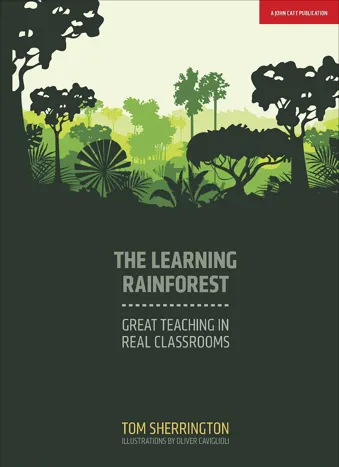


1. Three-Part Metaphor: Roots, Trunk, Canopy
- Roots: Establish routines, behaviour, and classroom culture.
- Trunk: Build deep subject knowledge and curriculum coherence.
- Canopy: Explore creativity, challenge, and diverse learning experiences.
2. “Teach to the Top”
- Aim high for all students, scaffolding up rather than dumbing down.
- Encourage ambition and avoid limiting expectations.
“Teach to the top and scaffold up.”
3. Knowledge-Rich Curriculum
- Prioritise structured, sequenced knowledge as the foundation for learning.
- Focus on explicit instruction and retrieval practice.
“Knowledge is the backbone of learning; it enables creativity, not the other way around.”
4. Teacher Autonomy
- Trust expert teachers to make pedagogical decisions.
- Oppose micromanagement and prescriptive teaching models.
5. Rainforest Thinking
- Embrace complexity, diversity, and adaptability in teaching.
- Encourage experimentation and professional growth.
6. Student Voice with Safeguards
- Support student-led learning but guard against uninformed choices.
- Expert guidance to stretch learners beyond their comfort zones.
7. Evidence-Informed Practice
- Draw on cognitive science, assessment theory, and curriculum research.
- Synthesise research into practical strategies for real classrooms.
8. 20 Strategies for Great Teaching
- Actionable ideas across the three metaphorical layers.
- Includes routines, questioning, modelling, feedback, and challenge.
9. Balanced Pedagogy
- Navigates between progressive and traditional approaches.
- Promotes a “third way” that values both structure and creativity.
10. Celebration of Teaching
- Frame teaching as intellectually and emotionally rewarding.
- Aim to inspire pride and professionalism in educators.
“Great teaching is a complex, intellectual endeavour.”
Find out more!
Like what you’ve read in this quick summary?
My summary can’t possibly do the book justice. Find out more by getting your own copy.